


Sandow Sculpture Trophy
Sandow Sculpture Trophy
Couldn't load pickup availability
SKU:
If you love competition and bodybuilding, you can't miss the opportunity to own your own Sandow trophy. Made of organic polymer with perfect finishes. It measures 45cm in height. Not just another statuette.
Eugen Sandow (1867-1925), considered the father of modern bodybuilding, was the first athlete to display his physique and the first organizer of physique competitions in the early 20th century at the Royal Albert Hall with himself, Sir Arthur Conan Doyle, and Sir Charles Lawes as judges.
He was a truly strong man, even compared to today's physiques. He could lift a 110 kg dumbbell with one arm in a bench press motion. His physical development was so spectacular that he was exhibited at the World's Columbian Exposition in 1894 as a muscle-building artist who suggested the grace and form of ancient Classical Greek statues.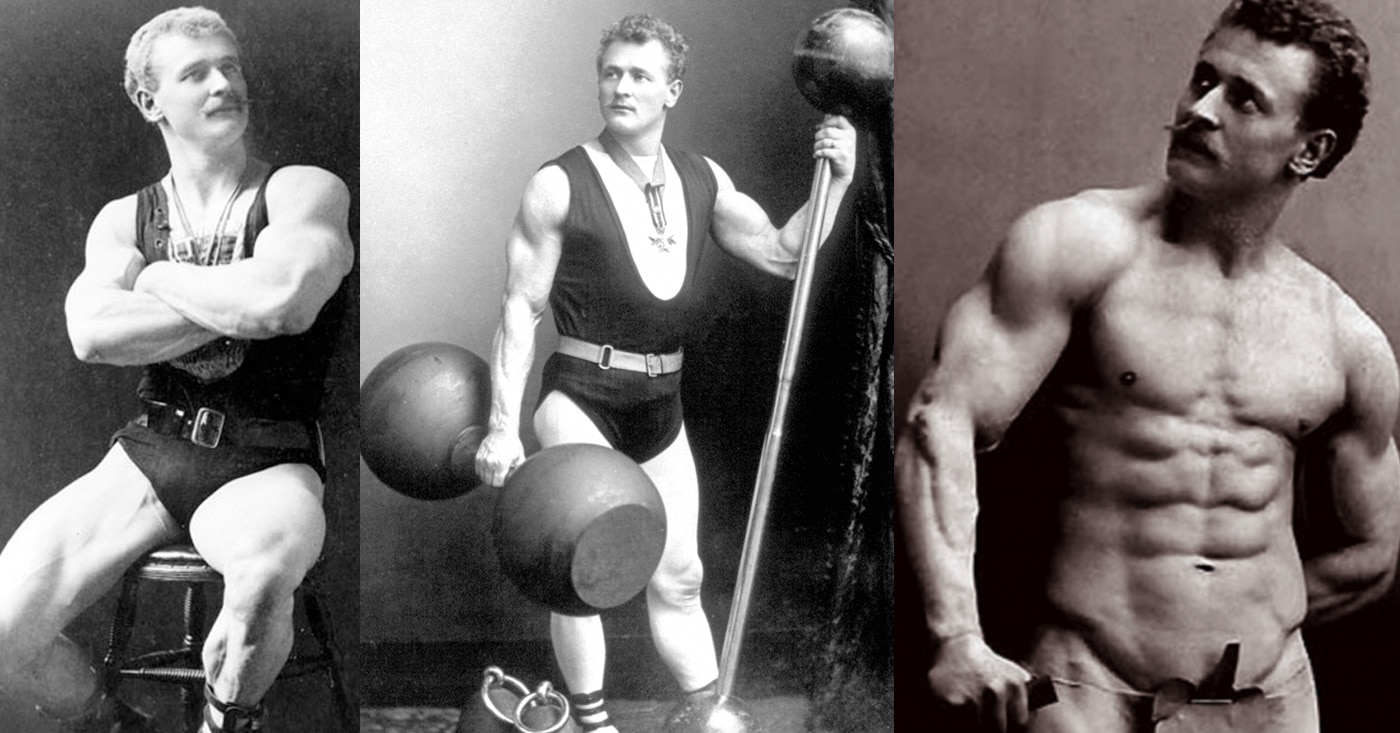
Sandow was born in the Prussian city of Königsberg in 1867 to Jewish parents and became interested in physical fitness when he visited Italy as a child. He left Prussia, ironically to avoid military service, and traveled extensively, eventually arriving in Brussels, where he was mentored by strongman Ludwig Durlacher, who performed under the pseudonym Professor Atilla. Sandow eventually made his way to England and married an Englishwoman. In 1889, he appeared on the British music hall stage when he defeated another flamboyant strongman in a weightlifting and chain-breaking contest. His fame accelerated, and he toured the world, but eventually settled in England, where the great and good followed his fitness regimes. He even became King George V's physical instructor. Interestingly, Sandow measured the proportions of ancient statues and formulated his own "Greek ideal" which he tried to apply to his own physique.
Frederick William Pomeroy was a key member of the New Sculpture Movement that revolutionized British sculpture in the late 19th century. British sculpture fundamentally changed with the arrival of the French artist Jules Dalou in 1871, who taught the art of figurative sculpture to his students. This had a profound impact on Lord Leighton who, in 1877, unveiled his Athlete Wrestling with a Python, in which a muscular youth is frozen in a death match with a deadly snake. Sculptors like Alfred Gilbert, Harry Bates, and, of course, Pomeroy sought to capture naturalistic representations of human anatomy, in contrast to the impressionistic style of their Parisian contemporaries.
Pomeroy's choice of Sandow as a model should be seen as fitting into this narrative. However, it differs from many of the idealized nudes of Gilbert, Leighton, and Bates, in that it is a contemporary portrait of a distinctly fin-de-siècle phenomenon: the strongman with his weights. Appropriately, Pomeroy's 'enhanced' casts of Sandow are still awarded to the winners of the Mr. Olympia competition (International Federation of Bodybuilding and Fitness) to this day. The current model is a particularly beautiful period example with a rich brown patina in very good condition.
Pomeroy entered the Royal Academy Schools in 1880 and in 1885 won the Gold Medal traveling scholarship. After studying with Marius-Jean-Antonin Mercié in Paris and traveling in Italy, he returned to London and began exhibiting with the Arts and Crafts Exhibition Society (1888). Pomeroy was an exponent of the New Sculpture and, like many of his contemporaries, executed ideal figures drawn from mythology and literature that show the twin influences of Renaissance Italy and contemporary France. Typical works include the bronze Dionysius (1890; London, Tate) and Love the Conqueror (1893; Liverpool, Walker A.G.). Numerous heavily modeled monumental works in bronze include Robert Burns (1894; Paisley), Dean Hook (1901; Leeds) and four colossal figures (1905) for Vauxhall Bridge, London. Pomeroy became ARA in 1907, Master of the Art Workers' Guild in 1908, a council member of the Royal Society of British Sculptors in 1914 and RA in 1917.
Remember that all returns are free, place your order and if there is any problem we will refund your money and send someone to pick up the package.
100% Guaranteed!
Do you have questions?
Consult them all from our FAQ page by clicking here. Or contact us directly on our contact phone by clicking on the WhatsApp icon.


